


A core pillar: Sompo's ambitions and vision for marine insurance
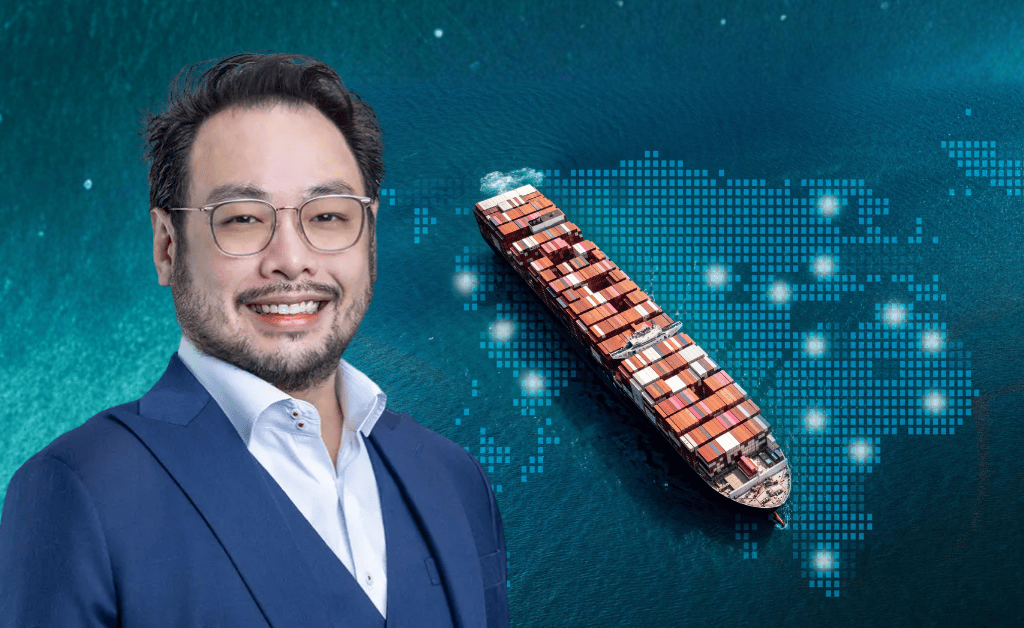
SOMPO IS COMMITTED to strengthening its position as a leading global marine insurance provider by adopting a truly international approach - tailoring strategies to local markets, in this case the Asia-Pacific market - leveraging advance technology, and addressing evolving risks, including those driven by climate challenges.
So says Dave Ong, head of Marine, Asia-Pacific at Sompo, talking about the group's strategic journey. That theme of visibility - in terms of both the Sompo brand and the company's ambitions in marine insurance - runs throughout his outlook for the sector.
Sompo is headquartered in Japan, but Ong's vision extends far beyond its roots. As the International Union of Marine Insurance (IUMI) gathers in Singapore this week - returning to the city-state for the first time in 19 years - Ong sees a timely stage to demonstrate that ambition. For him, marine is not a niche sideline but a "core pillar” for Sompo.
From presence to strategy
Sompo has operated in marine insurance for decades, with a global footprint already in place. Yet Ong was quick to stress that simply being present is no longer enough. "Our global presence is extensive. But our structure and go-to-market strategy are evolving to keep pace with the company's growth, particularly for the Asia-Pacific region," he told IUMIToday.
That evolution involves moving from local pockets to a coordinated regional strategy. The company's regional marine team, based in Asia, is tasked with setting direction, defining product focus and uniting diverse markets under one strategic umbrella.
"Tapping into our diverse portfolio and regional presence is key."
For Ong, unlocking value means balancing scale with nuance. "Tapping into our diverse portfolio and regional presence is key to fostering cohesion, while tailoring our approach for each country's unique needs and nuances."
The market's diversity demands sensitivity. "Asia-Pacific is a region of diverse countries, each with its own unique business culture, practices, client buying patterns and risks," Ong explained. "Our goal is not a one-size-fits-all model. Instead, we aim to embrace local nuances, empowering our colleagues to stay close to our clients, adapt to their evolving needs, and respond to the rapidly changing dynamics of the global supply chain."
Responding to climate change
No conversation about marine insurance today can ignore climate change. For Ong, the issue is existential to underwriting. "Climate evolution is a significant challenge across the insurance industry, not just in marine," he said.
The response is multifaceted: stronger modelling, better data and continuous review. "We continuously review and refine our risk underwriting processes, integrating increasingly sophisticated risk modelling systems and resources to support more informed underwriting decisions," Ong explained.
"The elements of risk, including those driven by climate change and other emerging factors, are becoming increasingly unpredictable. This remains a challenge we actively address by factoring these risks into our pricing strategies and coverage reviews."
Technology and transformation
Climate change is not the only force reshaping marine insurance. The digital transformation of risk assessment and claims management is gathering pace, and Sompo intends to be at the forefront.
Ong detailed the integration of advanced analytics. "We are leveraging the latest digital technology, across pre-underwriting, pre-loss front, and claims processes, enabling more precise and targeted pricing strategies," he said
"Beyond pricing, this technology allows us to identify emerging risk trends."
The applications go further. "Beyond pricing, this technology allows us to identify emerging risk trends that might otherwise be more difficult to see. It's not just about using technology, but also drawing on the vast claims experience and loss data from countries around the world to gain a more granular and comprehensive understanding of evolving loss trends.”
Regulatory complexity
Technology can offer sharper insights, but regulatory challenges still demand human expertise and local knowledge. In Asia-Pacific, with dozens of jurisdictions, the complexity is acute. "The regulatory landscape is ever-changing with the number of countries within Asia-Pacific," Ong said.
Here, Sompo relies heavily on its widespread regional footprint. "We have an extensive geographical network across Asia-Pacific, enabling us to use the local expertise within our many offices, keeping abreast of ongoing changes. Having such a deep local presence is invaluable, and we share that knowledge across our global community."

Evolving with supply chains
Marine insurance has always been intertwined with global trade. As supply chains grow more complex, insurers must evolve their products. Ong noted a major shift: "Logistics companies, for example, are no longer simply handling basic operations; they are evolving to provide third and fourth-party logistics services, offering end-to-end supply chain management."
That shift demands integrated solutions. "This evolution requires further integration of all aspects of marine insurance products. By combining various components, we deliver more comprehensive solutions to our clients."
Ong makes no secret of his aspirations for the marine business. "In short, we are very ambitious," he said. That ambition is both structural and relational. Structurally, Sompo wants to mobilise its full resources across borders. "With our geographical spread, our ambition - my passion - is to unlock our collective capabilities across the region, harnessing our shared strengths to realise our full potential," he explained.
Relationally, the goal is to move from transactional interactions to trusted partnerships. "At Sompo, we have significant growth ambitions, from both business and client relationship perspectives. Our goal is to continue to build and enhance our reputation as a trusted, long-term partner for our clients.
"We aim to further establish our brand as one that goes beyond recognition to a deeper understanding of the value we deliver for our clients and business partners," he concluded.
This article was first published in IUMI Today on 2 September 2025. Republished with permission.