


Japanese insurer looks to Asian advantage as US tariffs shift trade focus

Sompo regional head of marine Dave Ong eyes rosy prospects for intra-Asian trade.
US President Donald Trump’s tariff policies will likely accelerate trading within Asia as China diverts cargoes to buyers close to home, according to one of the region’s leading marine insurance players.
Dave Ong, head of marine in the Asia-Pacific region for Japanese insurer Sompo, said that some shipping and logistics players were halting investment and waiting to see how the tariff and port fee battle plays out.
He told Tradewinds: “There may be an impact in terms of East-West trade volumes .. but on the other hand, intra-Asia trade has potential for accelerated growth. It’s really challenging to predict what it will look like, especially now when the situation is extremely dynamic.”
The effect on trade flows from Trump’s “Liberation Day” sanctions on April is being keenly watched by insurers who will assess how risks have changed in light of the measures.
The US imports 40% of its ocean-hauled cargo from Asia, by far its largest source, but tariffs and port fees due to start in October are already hitting East-West trade, the International Union of Marine Insurance conference heard this week. The initial tariff announcement was greeted by a surge of goods into the US to beat the higher-rate deadlines.
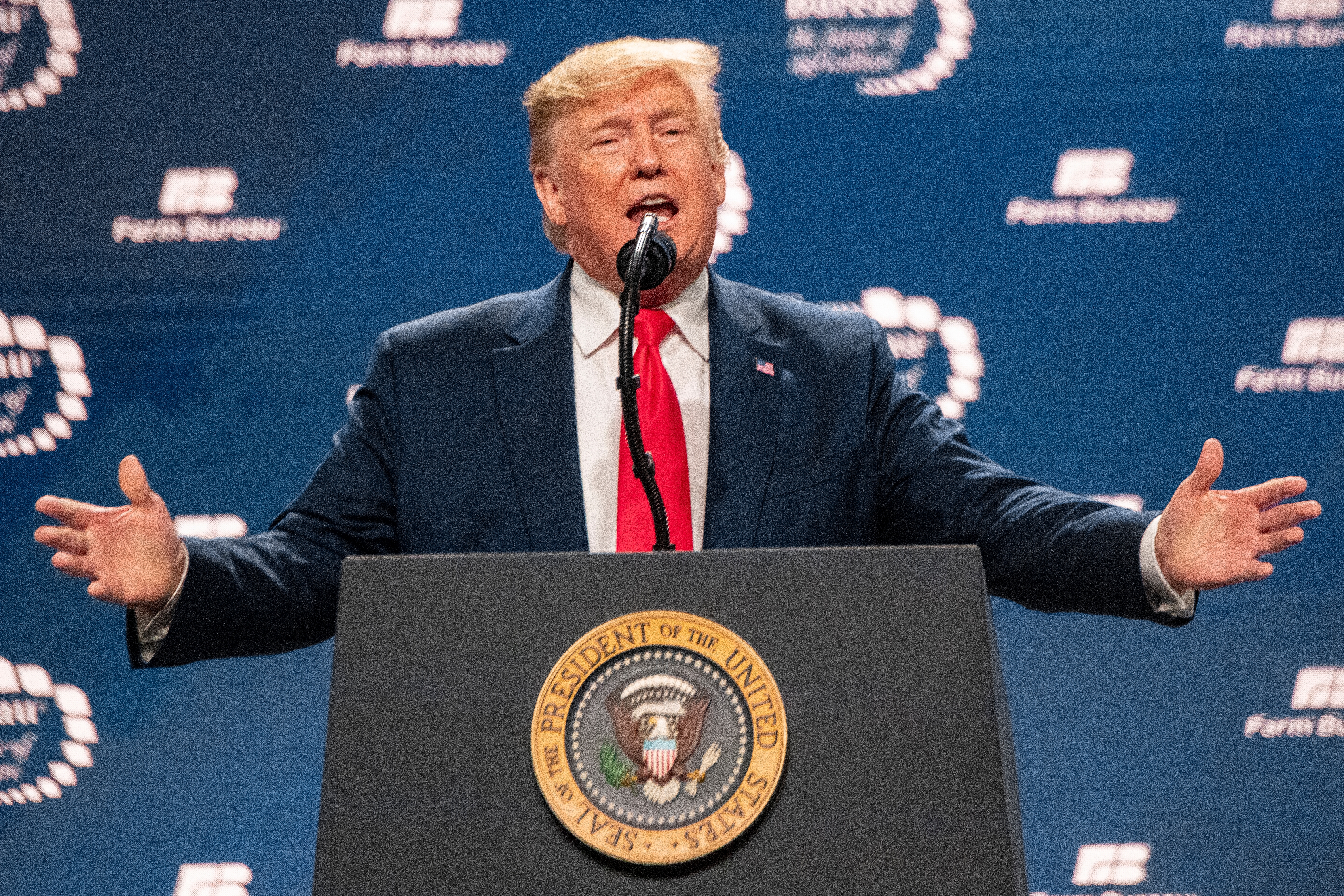
That led to stockpiling in warehouses and extra congestion at Asian ports, all of which changed the risk profiles of vessels and cargoes for marine underwriters, the IUMI conference heard.
Neil Barber, a senior officer at freight forwarder JAS Worldwide, said the “rollercoaster” of tariffs – with Trump measures either scaled back, cancelled or expanded in the months since April – had led to significant impacts. In anticipation of a rush of goods being shaped to the US before the deadline, vessels were moved from Asia – South American routes to the US, he said.
But the scale of the expected surge could not be matched by extra factory production in Asia, Barber said. It left container ships to the US underemployed, and booming rates on the South America routes because of a shortage of tonnage switched from there. “A lot has to be done to move vessels around to provide new services,” Barber said. “So when things happen unexpectedly, it can create chaos.”
Insures such as Sompo, one of Japan’s big three, are looking to tap into the anticipated expansion of Asia trading to provide marine and cargo cover.
Ong said Sompo was closely monitoring the ageing global fleet and had decades of Japanese claims data to draw on when assessing risk for the Asian hull market. He said they were more cautious over covering livestock carriers, car carriers and ultra-large container ships, because of the risk of huge losses from uncontrollable fires.
Sompo last month announced a $3.5bn deal to take over US-based Aspen Insurance Holdings, a part of a broader strategy to extend its reach beyond its Japanese stronghold. Marine has been one of the key pillars of the insurer, and Ong said the company would be looking to strengthen its position in Asia, where it already has a presence in 11 countries.
Sompo has traditionally looked to support Japanese shipping interests abroad, but is now looking to make inroads into local market in the region.
Asia secured about 30% of the $40bn of global marine insurance premiums in 2024, driven by strong growth in China, particularly in cargo, according to IUMI statistics. “China as a market is significant in size,” Ong said. “There are non-Chinese insurers that are thriving as well, of which we are one.”
He said that global trade was becoming more complex and the upheavals made it hard to plan – a situation that was likely to continue for months. “Having said that, my optimism for intra-Asia growth will be one of the contributing factors of our expected trajectory for the next few years,” he said.
This article was first published in Tradewinds News on 12 September 2025. Republished with permission.