
The Risks They Didn't Know Existed, and Both Lost Money. Why?
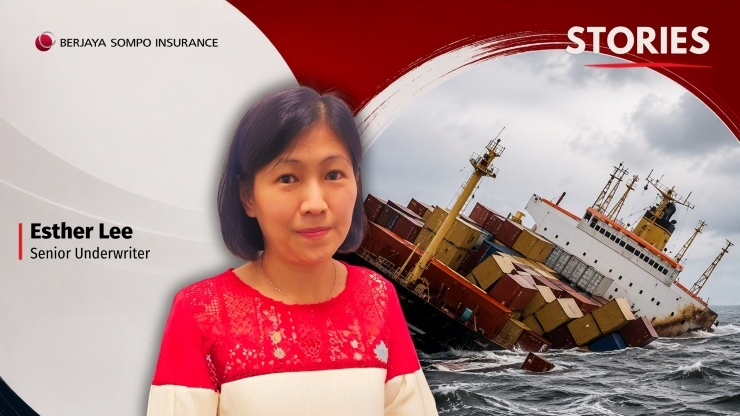
The customer had a container of furniture arriving from overseas. Nothing particularly unusual about that. The unusual part came when he tried to collect it.
He couldn't.
There had been an incident involving the vessel, and General Average had been declared. He had never heard of General Average before. More importantly, he had never bought marine cargo insurance.
His Cargo Was Fine. So Why Was It Being Held?
I remember having to explain what that meant.
Imagine a vessel in serious trouble at sea. To save the ship and everything else on board, cargo may have to be sacrificed, or significant expenses may have to be incurred. If those actions save the rest of the voyage, the loss is shared among the parties whose cargo was saved.
So your own container does not necessarily have to be damaged for you to have a financial obligation.
That was the difficult part for this customer to understand. His furniture was still there. Why should he have to pay for somebody else's loss?
But that is how General Average works. If sacrifices or extraordinary expenses were necessary to save the vessel and the remaining cargo, those who benefited may have to contribute.
And until the required financial security is provided, the cargo may not be released.
For an insured shipment, the insurer can normally assist with the required security, subject of course to the policy. This customer had no insurance. He had to find the money himself.
Meanwhile, the container was still sitting there.
The longer cargo is held, the more costs can accumulate. Demurrage, detention, storage and other charges can turn an already unpleasant situation into an increasingly expensive one.
What struck me about the case was not that the customer had taken an obviously reckless risk. He simply did not know this risk existed.
Most people understand that cargo can be damaged, stolen or lost. Very few people imagine having perfectly good cargo sitting in front of them and being told they cannot take it until they pay.
Then Came a Very Different Problem
Years later, I encountered a very different case that ended with a surprisingly similar lesson.
This customer was an exporter of coconut products. His goods were sold on FOB (Free on Board) terms.
From his perspective, he had done his part.
He delivered the goods and got them onto the vessel. Under the agreed terms, the risk then passed to the buyer. The buyer was supposed to arrange the insurance.
So, the seller should have been able to move on.
Except the buyer didn't buy the insurance.
Something happened to the cargo before it reached its destination, and the buyer subsequently refused to pay the seller.
Now the exporter had a problem.
The Contract Was Clear. The Situation Wasn't.
He could point to the contract. He could say that the risk had already passed to the buyer. He could pursue the buyer legally.
But he also wanted to keep the customer.
That is where business becomes more complicated than the wording on a sales contract. Winning an argument does not necessarily mean getting paid. Suing a customer may mean spending months or years recovering money, paying legal costs and possibly losing the business relationship altogether.
The exporter eventually suffered the loss.
There was another option he had not known about.
A seller trading under terms where the buyer bears the transit risk can consider Seller's Interest insurance. It is a contingency cover designed to protect the seller's financial interest when something goes wrong after the risk has supposedly passed to the buyer.
The important word is "supposedly."
The contract may say the buyer carries the risk. The buyer may be responsible for buying insurance. Everybody may understand their obligations perfectly.
And then the buyer simply does not do it.
The Risk You Don't Know Is There
I have seen relatively few cases like these compared with the everyday marine claims involving damaged or stolen cargo.
Perhaps that is exactly why they stay in my mind.
The first buyer had cargo that survived, but he still faced a bill before he could get it back.
The second seller had already transferred the risk, but he still ended up carrying the financial loss.
Neither problem was obvious at the start of the journey.
And in both cases, by the time the customer discovered the gap, the shipment had already sailed.
Esther is a Senior Marine Underwriter at Berjaya Sompo with more than 20 years of experience in marine insurance.
This article is for general awareness only. Insurance coverage is subject to the relevant policy terms, conditions and exclusions, and the circumstances of each case.